Masculinity has been the hegemon in the social, political and economic world since the beginning of time. The “ideal man” has changed multiple times over the centuries. From the chivalrous knight, the tough soldier, the polished businessman, to the sporty jock and sexy rockstar, masculinities have evolved and morphed with the ever changing cultural trends. However, between these different masculinities, a few things have remained the same. To be “masculine” has always been to have some sort of domination over the “feminine”, whether that be intellectual or physical, and whatever characteristics these masculinities represent have always been more valued than those characteristics of femininity, even if they are identical.
Over the past two decades masculinity has undergone an interesting shift. Before, the ideal man was symbolized by someone embodying every masculine trait to the extreme with the complete rejection of feminine traits. Now, thanks to influential cultural figures such as David Bowie and Prince, the “ideal masculinity” has adopted more feminine traits and masculinized them in the form of power. In Diriye Osman’s Article A Feminine Man is a Powerful Thing to Be, Osman describes the power that is given to feminine traits once they are acted out by a man. Meaning, femininity is more attractive, accepted, and respected when they are displayed and embodied in a man.
A specific example is seen in Sam Rowe’s article Move over spornosexuals, the ‘softboy’ is Masculinities New Favourite Stereotype where Rowe describes the new popular type of masculinity of the decade called the ‘softboy’. The soft boy is a direct opposition to the so called f***boy (a young man who sleeps with multiple ladies at a time, usually leading them on and abruptly cutting them off by never talking to them again). This new man while being physically masculine is also emotional, understanding, sensitive and attentive and he is not afraid to own it. He will talk about his feelings with you, listen to all of your problems and even return all of your texts and calls. This man has just enough “masculine” traits to keep him “heterosexual” and thus physically attractive to women and socially acceptable to men, while also having just enough “feminine” traits to make him emotionally relatable and therefore sexually irresistible to women. It is interesting to note that there is a certain extent to which a man is socially allowed to embody feminine traits, for example, if he begins to display physical traits of women he will be deemed as breaking gender norms and therefore “socially unacceptable” to our dominantly heteronormative and patriarchal society.
With the softboy example, I want to show how this new masculinity is essentially “appropriating” the feminine traits and redefining it as the new masculinity without giving credit to where it is deserved. To put this all in perspective, let me first define where this idea originally comes from: Cultural Appropriation. Cultural appropriation is the taking and exploitation of elements of one culture (a minority culture) by the dominant privileged group without giving credit to the original ethnic group. These culturally appropriated attributes/elements are considered beautiful and cool when used by the privileged white people, while the same group that provided the culture are being subjugated and oppressed for having such characteristics. One example can be seen in Kylie Jenner’s new “look” appropriated from African American features.
Recently, Kylie’s plumped up lips attracted so much attention that it caused a whole new cultural trend called the “Kylie Jenner Lip Challenge” where girls and guys would go to extreme measure of using lip plumpers, lip suctions and even getting surgery to get their lips as big as Kylie’s. Amanda Lastenberg correctly points out that Kylie is exploiting African American culture by taking their physical features and fashion style to gain popularity while ignoring the everyday African American issues such as racism and police brutality.

Moreover, Nneoma Onkoria tweeted “Don’t Forget, these are the features they tried to teach you to hate”. This is essentially the process by which the once hated and discriminated against features of subordinate groups are made popular and desirable by the privileged hegemonic groups. This is not only seen between cultures and ethnic groups, but also between the subordinate and dominant dichotomies of the masculine and feminine.

Bringing it back to masculinity, these ‘soft boys’ have taken on the once hated feminine traits of sensitivity and emotion and made them desirable and admirable. Meanwhile the same traits, when displayed by women, are considered undesirable and unattractive. A real world example of this can be seen in the job requirements of solders described in Hooper’s “Masculinist Practices and Gender Politics: Operation of Multiple Masculinities in IR”. Hooper reveals how men routinely engage in “feminine” practices without acknowledging that fact. For example, soldiers are usually characterized by manly traits such as strength, toughness, logic, and violence; however, they also require the traditionally looked down upon “feminine” traits of “obedience, submission to authority, attention to dress detail, mutual concern, tears” over soldiers’ deaths (Hooper 32). Although masculine and feminine traits are set up as dichotomies of active versus passive, Hooper argues that instead of these qualities being inherently masculine or feminine, the qualities are given their power and stereotype by the person that possesses them. Meaning that, when a man, for example Ryan Gosling’s characters in different films, displayed the “feminine” traits of sensitivity and emotion, they were given a new sense of power and became the new desired form of masculinity.
This can also be seen in the controversial topic of Caitlyn Jenner’s recent coming out as transgender. While Caitlyn being an influential figure for transgender issues is an amazing progressive step in the LGBTQ community, Caitlyn Jenner could just be the perfect living example of the taking on of feminine characteristics without giving credit where deserved. Many feminists, such as actress Rose Mcgowan, have unleashed a multitude of criticisms against a comment Caitlyn Jenner made saying that “the hardest part about being a woman is figuring out what to wear”. While they commend her for staying true to herself and opening up dialogue for the trans community, they criticize her way of deepening the stereotypes that feminists have been working against for the past half century. Moreover, one could even question the fact that Caitlyn Jenner won the “Woman of the Year Award”. The fact that the olympic medalist who has lived his whole life as a privileged white man of high social status, won such an award without ever having experienced the misogyny and daily sexist trials women deal with is a bit concerning and many people have criticized Glamour Magazine’s decision. Some even jokes (or maybe not) that it just proves that “men are better than women at everything including being a woman.”
Another example of this masculinization can be seen in the consumer market. Advertisers are taking things that are typically deemed more feminine, such as a loofah, diet drinks, and healthy cereal, and masculinizing it so that they call sell it to men. For example, AXE gave loofah a manly design, a new name (AXE Shower Tool, Detailer), and a more expensive price to appeal to men who might not want to invest in a regular loofah. The way in which they are taking originally “feminine” objects and making them masculine in order to sell shows just how fragile masculinity is in not only the social and international world, but also the consumer marketing world.
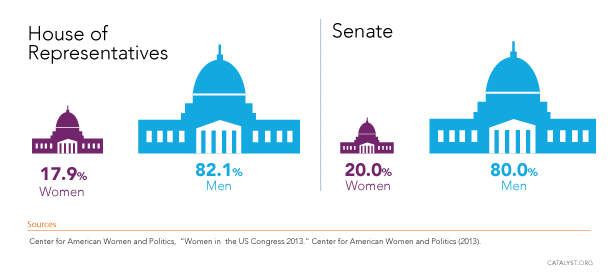
These gender traits appropriation can also be seen in politics. In the United States, we still see a huge gender gap within politics. Although women have come a long way, there is still a huge lack of women represented in the U.S. government. Referring to the chart below, there was about a 20% to 80% ratio of women to men in the House of Representative and the Senate in 2015. Moreover, women are still not paid equally to men. This reveals that although the US government claims to be a place of “equal opportunity” and although they even imposes these liberal values on less developed countries, the US proves to be very hypocritical as it does not even live up to the feminist values of equality for itself.
The dominance of men and masculinity can clearly be seen in the social, political, economic, consumer, and pop culture worlds. Although masculinity has evolved over time to incorporate feminine values, women and minority groups are still being discriminated against for embodying these same qualities that the “ideal masculinity” takes from. Researching and writing about this topic really makes me wonder if society will ever reach a point of where there are no feminine or masculine stereotypes tied to certain characteristics and men and women will be free to behave in whichever way they choose without being considered breaking gender norms. Do you think that our world will ever reach this point of “gender neutrality” within the cultural, political, and economical world, and if so, how long do you think it will take to get there?

No comments:
Post a Comment